
West Springfield Directory Holdings
The Bertera History Room at West Springfield Public Library is the strongest confirmed local shelf. It reports West Springfield directories from 1860 to the present, plus maps, local and regional history material, newspapers, yearbooks, and Town Reports. The collection is used in the room, during open hours or by appointment. The room has a microfilm reader, but states that printing and scanning are unavailable. That makes a careful citation, notes, and any permitted page photograph more important than relying on a quick transcription.
| Collection | Years | Where Held | Access |
|---|---|---|---|
| West Springfield city directories | 1860-present | Bertera History Room | In-room use; confirm hours or appointment |
| West Springfield yearbooks | 1913, 1914, 1923-present | Bertera History Room | In-room local-history collection |
| Town Reports | 1860-1983 | Bertera History Room | In-room local-history collection |
| Springfield regional directories | 1866-1989, near-complete | Springfield City Library | Some digitized; confirm West Springfield coverage |
The verified local run is a holding statement, not a promise that every year is present or indexed. No exact digitized West Springfield directory page was verified during the research pass, and no actual local abbreviation key was inspected. Ask for the specific volume, then record its title, publisher, year, page, and any printed symbols before drawing conclusions.
The Bertera History Room’s collection page documents the local directory, map, yearbook, and Town Report holdings.
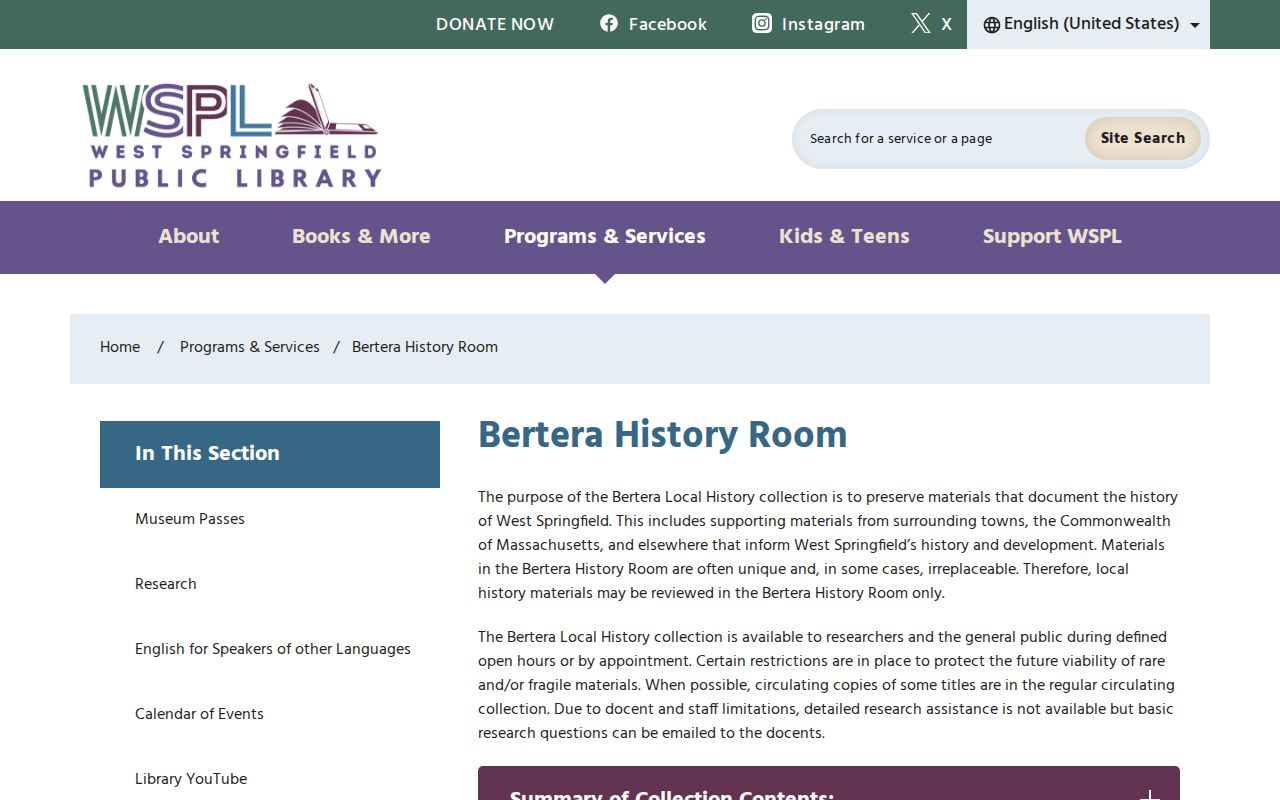
The library view connects the historical city directory search to the room where the confirmed local run is kept.
Bertera Desk in West Springfield
A visit to the Bertera room has practical limits worth planning around. Its local-history materials are handled in the room, and the room gives a Tuesday 9 to 2 or by-appointment schedule that is more specific than general library hours. Clean hands, paper, pencils, a laptop, and a phone are allowed; food, open bags at the table, and writing on material are not. Researchers may bring their own microfilm reels. Basic questions may be answered by email, but detailed research help is not offered.
These rules shape a useful city directory session. Start with a small list of surnames, known addresses, and likely years. Keep one citation line for each find. When the listing is unclear, note the printed wording instead of expanding it from memory. A yearbook or Town Report from the same room can then supply a date, civic role, school context, road reference, or institutional name without turning one directory entry into a full identity claim.
The Massachusetts State Library genealogy guide is the documented catalog route for city and town directory research.
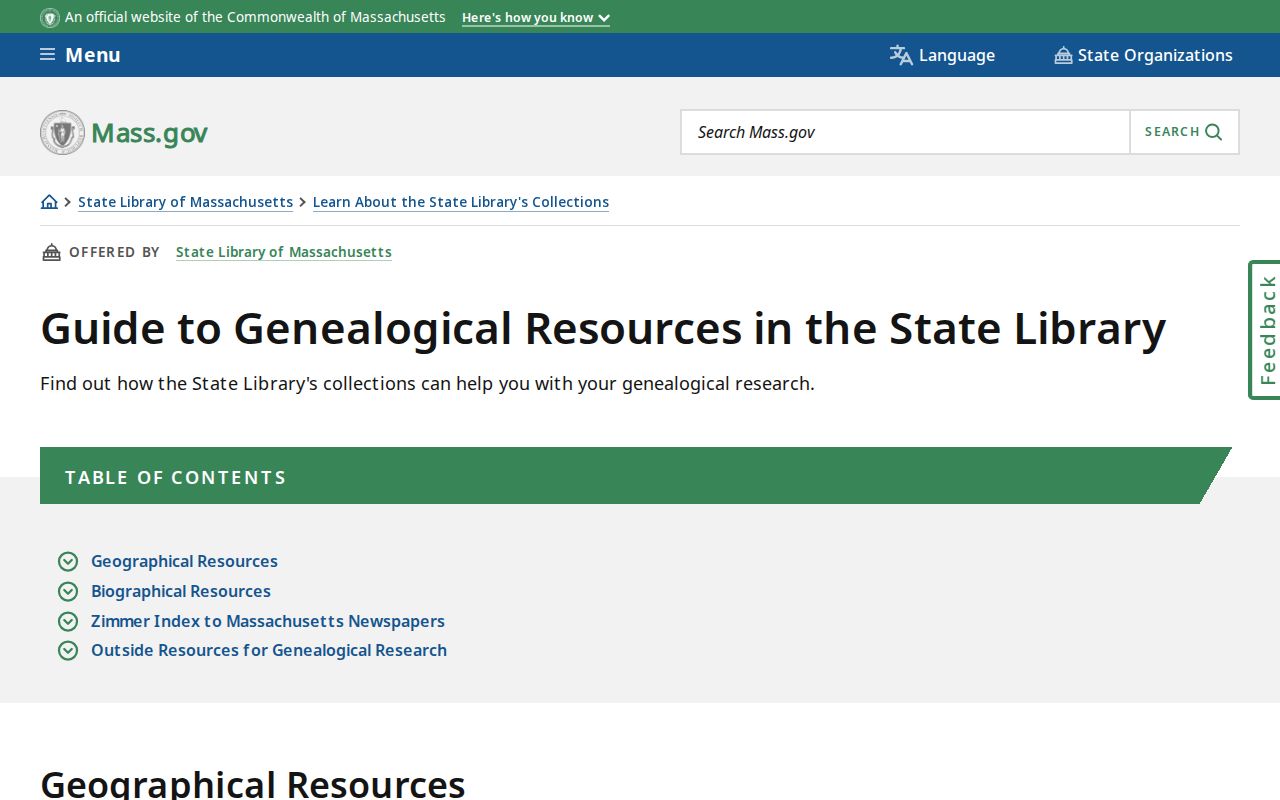
The State Library route is a catalog and research aid, not evidence that an exact West Springfield city directory page is digitized there.
West Springfield Town Name History
West Springfield became a city in 2000, but municipal sources still commonly use “Town of West Springfield.” Older material may use town language as well. Search both forms and retain the wording printed in the source. A regional volume can also use Springfield as a market, postal, or county-seat reference. The Connecticut River separates the municipalities even when a repository, court, newspaper, or directory title uses Springfield in its name.
This naming issue is not a minor spelling preference. A household listed under a joint or regional title should be checked in the actual city section before it is attributed to West Springfield. Search the street, the date, and the municipality together. The same care applies when an old record uses Mittineague, North End, or a nearby place name. Geographic words need a source date and context before they can be linked to a present address.
Note: Preserve the title-page wording and the directory’s city section when a regional volume is used for West Springfield research.
Reading West Springfield Directory Entries
A directory line is a dated editorial record, not a modern profile. Copy the name exactly, then record the street or address, the occupation if printed, spouse or household wording if printed, and any publisher mark. Some Massachusetts directories include house guides, business lists, or voting lists, but the format changes by volume. The research did not inspect a local sample entry or its abbreviation key, so no West Springfield symbol should be assigned a fixed meaning without reading that volume’s own key.
| Name line | Transcribe initials, surname spelling, and any household wording exactly as printed. |
|---|---|
| Street or address | Record the house number, street spelling, and the directory year. |
| Occupation | Keep it as a dated descriptive field, not proof of later activity or residence. |
| Printed household mark | Copy the mark, then consult that volume’s key before interpreting it. |
| Source citation | Keep publisher, title, year, page, repository, and image or page reference when available. |
- Criss-cross directory
- A reverse section arranged by street or address, when a volume supplies one, rather than by surname.
- Householder index
- An index that points from an address or household heading to a listing; its rules depend on the publisher.
- Abbreviation key
- The printed guide to the volume’s symbols and shortened words. Locate it before assigning meaning to a mark.
A city directory can identify an address or an occupant clue, but it does not prove title. For a current parcel or deed question, use the modern records workflow on the West Springfield streets page rather than treating an old listing as a current property record.
West Springfield Directory Companions
Springfield City Library’s local-history resources provide a regional fallback with near-complete Springfield city directories from 1866 through 1989, some digitized, along with yearbooks, newspapers, and genealogy material. That collection can help when a title spans both sides of the river, but it is not a replacement for the Bertera holdings. Check the title page and section heading before placing an entry in West Springfield.
Yearbooks can add class, caption, photograph, or activity context. Town Reports can add officeholders, roads, schools, public works, licenses, or departmental dates. Newspaper material can support a dated event, but the regional Springfield trail has a documented September 1946 strike gap. A missing item in that period is a gap in available reporting, not proof that no event occurred.
The regional library collection page describes the directory and newspaper fallback.
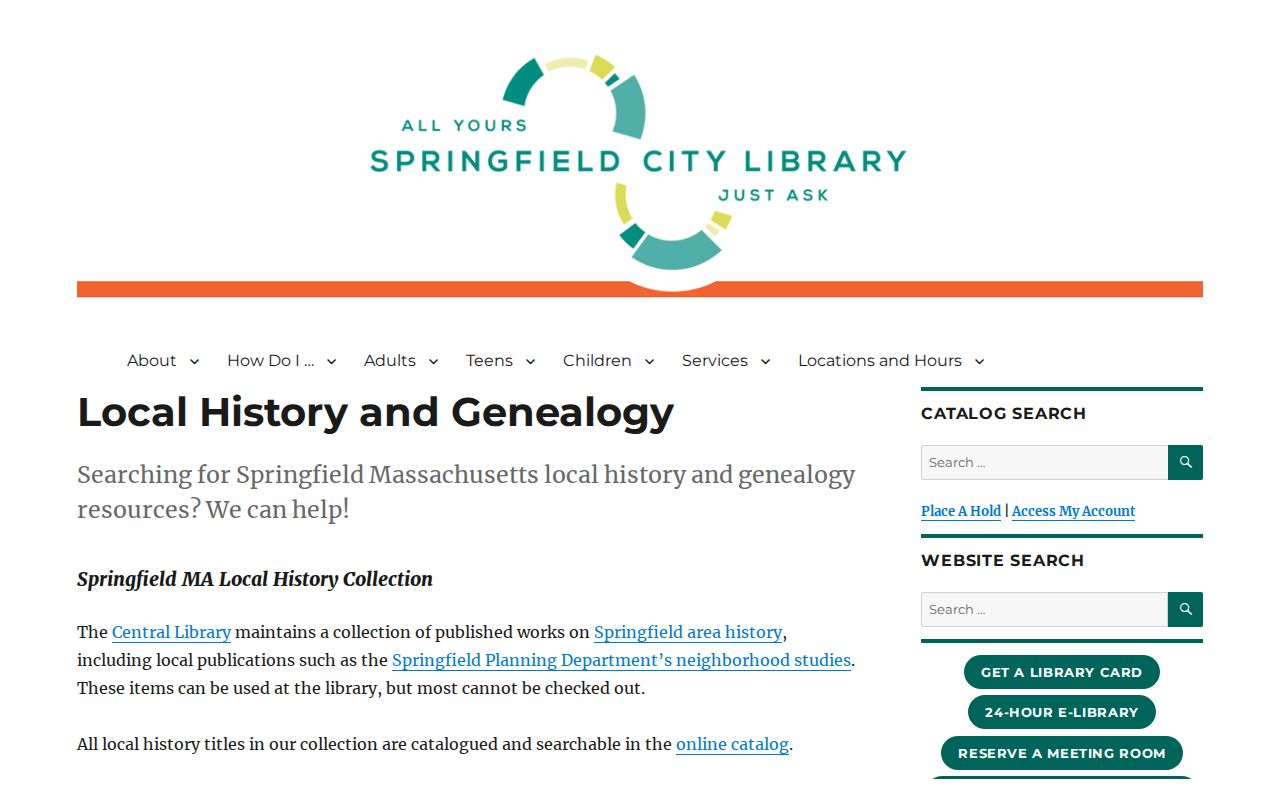
The regional holdings image is useful as a reminder to verify the title and city section before assigning a directory line to West Springfield.
Trace West Springfield City Directory Households
Tracing a household works best as a dated sequence rather than a search for a single definitive listing. Begin with a surname and one known year. Then test the same surname and address in nearby volumes. When a number vanishes, try the street without the number, nearby house numbers, spelling variants, and the reverse section if the publisher provides one. A directory may reflect a resident, boarder, business occupant, or prior address, so the role must remain descriptive.
- Locate the earliest confirmed name or address in a West Springfield volume and cite the page.
- Follow the surname and street through available years, preserving changed spelling and number forms.
- Compare the entry with a census year that is publicly available under the 72-year rule, remembering that each source has its own date.
- Use yearbooks, Town Reports, newspapers, vital material, or probate as separate corroborating records when they fit the question.
- Mark an absence as “not found in this volume or year” until another source explains the change.
The federal census is a snapshot on an enumeration date, while a directory can describe a mailing, business, or residence context. A deed proves a transfer, not continuous occupancy. Matching age, address, family context, and date across several sources is stronger than repeating a name from one index.
Maps Behind West Springfield Records
Maps help explain why a street or municipal label changes across historical records. The Massachusetts Digital Archives identifies a 1795 Plan of West Springfield and two J. Lathrop plans from 1831. They can connect roads, river geography, bridges, and settlement names to later research. They cannot establish a modern parcel boundary. For that, the recorded plan or a survey is the controlling source.
| 1795 | Plan of West Springfield, volume 16 page 2, with a reported scale of 1:39,600. |
|---|---|
| 1831 | Two J. Lathrop West Springfield plans, volume 10 pages 14-15. |
| 2000 | City-form transition, while “Town of West Springfield” remains common in municipal records. |
The 1795 Plan of West Springfield supplies documented road and land context for a historical directory search.
The 1795 map supports a place-based comparison, not an unverified conversion of an old directory address into a modern parcel.
The 1831 J. Lathrop map collection provides a second dated reference point for roads and historical place names.
Comparing the two map dates can expose a changed place label that needs more research before it is attached to a family line.
West Springfield Directory Research Gaps
Several useful sources remain unverified. No exact scanned West Springfield directory page, local abbreviation key, dedicated local obituary index, cemetery interment database, historic poll-book collection, funeral-home archive, or direct university alumni directory was located. The Ramapogue Historical Society, based at the Josiah Day House, is an appointment-only historic-house resource, not a confirmed searchable resident index.
When an online portal is unavailable, the documented fallback sequence is the Bertera room for local directories and microfilm, Springfield City Library for regional material, the State Library genealogy guide for catalog routes, and State Archives or established genealogy institutions for records in their custody. A narrow request to the Town Clerk can be made under the Massachusetts Public Records Law, G.L. c.66 §10 when a known municipal record is not indexed. Name the department, date range, subject, and record type. The law does not require the town to create a new resident list.
Note: Keep unresolved years and source gaps visible in a research log rather than filling them with an unsupported household history.