
Finding West Springfield Residents
Pick the record that fits the question. A parcel search suits a known street address. The voter-status form goes the other way: it needs a name, date of birth, and residential ZIP before it returns anything. A deed can clarify how a title changed hands. For old family addresses, the Bertera History Room helps. Court dockets name public cases, but a docket is not the case file and proves nothing about where someone lives now. So the West Springfield residents directory works as a chain of cross-checks, never as one master list.
Keep each result in its lane. An assessed owner may not be the deed party. The tax mailing recipient, directory occupant, voter registrant, and permit applicant can all be different people. Dates carry as much weight as names. When municipality, address context, date, and role all line up, the record gets stronger. When sources clash, ask the custodian for the underlying record instead of forcing a match.
- Begin with the address or name you already know and record the source date.
- Use the assessor or GIS layer to identify a parcel and its registry reference.
- Check the Registry index or image for the transfer and legal description.
- Use the voter, court, clerk, or library route only for the distinct question each source can answer.
- Send a narrow request to the right custodian when the needed existing record is not online.
West Springfield Records Offices
West Springfield runs on a city form of government. Yet many municipal pages still read Town of West Springfield. So search both names, especially in older records. The county seat sits in Springfield. That is why land, probate, district-court, and regional-library paths can lead across the Connecticut River. Hampden's general county government was abolished administratively. Even so, the specialized Registry of Deeds still exists. It still serves as the land-record office for West Springfield. Local assessment, clerk, permit, and request routes stay with the municipal offices.
Hampden County Registry of Deeds
436 Dwight St, Room B042
Springfield, MA 01103
413-755-1722
Registry records portal
West Springfield Assessors
Municipal assessment route
West Springfield, MA 01089
AxisGIS property viewer
Town Clerk and Registrars
26 Central St, Suite 8
West Springfield, MA 01089
413-263-3012
For a detailed address trail, use the West Springfield street records route, which traces parcel screens, voter results, and scanned deeds. The office names above identify the custodians. Every result is still a dated record.
West Springfield River-Side Records
West Springfield split from Springfield in 1774. A Westfield tract joined it in 1802. That history explains why an old source may name a place that looks nothing like a modern address. Regional offices use Springfield addresses because that city holds the county seat. So check any record first. Its date, municipality, street, ZIP, and purpose all matter before it attaches to a present-day person or parcel. The town's own label, "Town of West Springfield," adds one more search variant.
The 1795 plan and two 1831 J. Lathrop plans give geographic context only. They are not modern boundaries. Pair an old road or settlement label with current municipal GIS. Then confirm title through the Registry for land questions. That order is safer than treating a postal label, a map overlay, or a historical directory as a legal description. Each kind of record carries its own weight.
Note: Historical West Springfield, Springfield, and Westfield references can be valid for their period without identifying the same modern parcel.
Current West Springfield Resident Rolls
Each public system in West Springfield lists people for its own reason. The assessor and the GIS layers answer parcel and tax questions. The Town Clerk and the Board of Registrars handle the municipal route to a permitted voter file, and a state form covers one person's own status. The Registry indexes parties to land documents. MassCourts covers public case types only. A library directory serves as historical evidence. None of these is a household census. The West Springfield residents directory method names the source behind each record instead of folding them into one claim about who lives where.
| West Springfield source | What it can show | Keeper | Access route |
|---|---|---|---|
| Assessment parcel card | Tax-record owner, situs, mailing route, values, and registry reference | Assessors | AxisGIS informational portal |
| Municipal voter file | Permitted public voter fields for a specified list date | Town Clerk / Registrars | Municipal request under state rules |
| Individual voter status | Status, polling location, and officials for an input person | Secretary of the Commonwealth | Name, DOB, ZIP, and agreement form |
| Registry index | Deed, lien, plan, mortgage, and title parties | Hampden Registry | Recorded or Registered Land search |
| Directory holdings | Historical address, occupation, and household clues | Bertera History Room | In-room collection or appointment |
A roll is built for a set administrative purpose. An index merely points to a record. It does not vouch for every fact inside that record. A parcel is one mapped unit of land. A criss-cross directory arranges listings by address and can sometimes surface a past occupant. Keeping these terms straight keeps a mailing address, or a stale listing, from being read as proof of a current residence.
- Roll
- A list created for one function, such as voter administration or assessment.
- Index
- A search aid that leads to a source record, image, book, or file.
- Parcel
- A tax and mapping unit that may differ from an address or household.
- Criss-cross directory
- An address-first directory used to find historical occupant clues.
West Springfield Parcel Records
The West Springfield Open Data portal is the municipal GIS starting point. Its layers cover parcels, ownership, and addresses. They also include permits, zoning, flood zones, historic districts, school districts, and voting districts. The parcel ownership schema carries owner and mailing fields. It also holds RegistryBook, RegistryPage, Map, Block, Lot, assessed values, PropertyID, UseCode, and Zoning. Layers can change. So carry a narrow query with any research note about a West Springfield parcel. Carry its query date too.
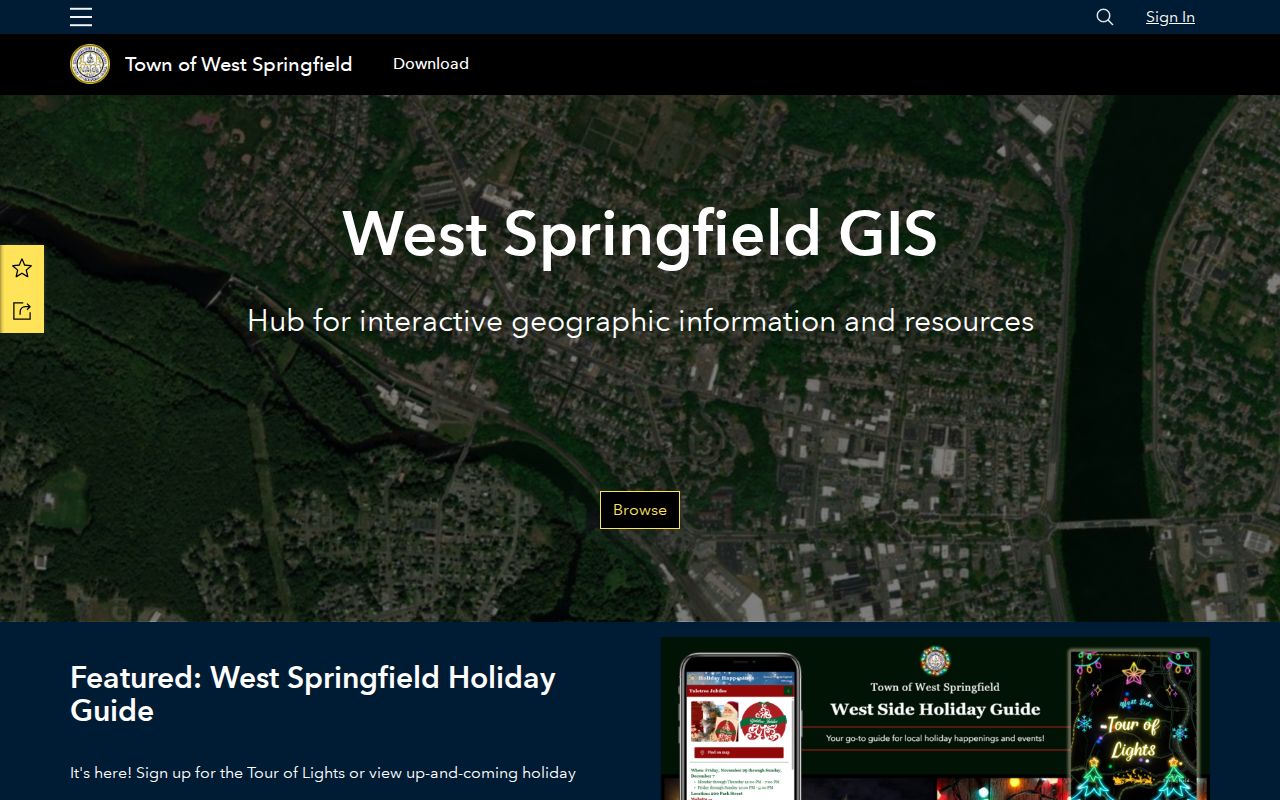
The portal screen is a map-and-layer entry point. It offers parcel context, not certified title. It is not a complete list of people at an address.
AxisGIS is the assessment view. It uses the local PIN pattern 000-00000-00-000. It labels its parcel information as public and informational rather than a survey or recorded deed. Carry the AxisGIS property ID, map-block-lot fields, and registry reference to a document. Lean on the Registry image for any title question. A tax mailing address can also point to a trust, an estate, or a business. It may equally point to a person living elsewhere.
| Field | Use in a search |
|---|---|
| PIN / PropertyID | Connects the map and assessment record. |
| Situs address | Shows the physical parcel location. |
| Registry book/page | Leads to a deed or related registry document. |
| Map, Block, Lot | Bridges a parcel to plans and older descriptions. |
| Use code / zoning | Describes administrative land-use categories, not a household. |
West Springfield Voter Geography
A Massachusetts voter-status form looks simple for a reason. It takes a first name, last name, birth date, and five-digit ZIP. Tick the terms box too. What comes back is narrow. You see registration status, a polling location, and current state or federal officials. The form is not a West Springfield residents directory by any stretch. It offers no statewide voter file, no reverse-address search, and no household profile. A full municipal voter list requires a separate request to the Town Clerk or the Board of Registrars. Massachusetts law sets which fields stay public and which stay protected.
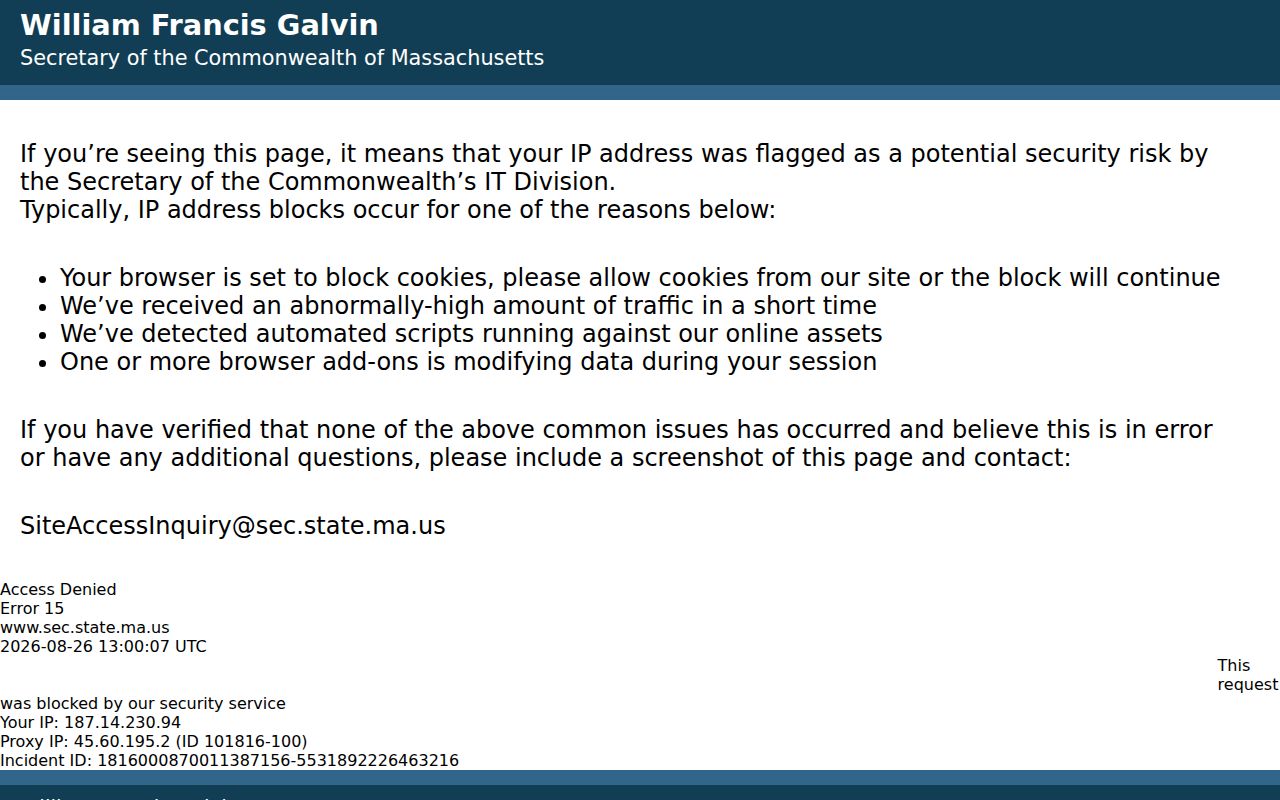
A form this bare teaches a lesson. Name-only confirmation is not a records search. It verifies one person rather than listing a street. West Springfield sits in eight precincts on the 2021 state map. Precinct lines and the municipal voting-district GIS layer help a resident read civic geography. Yet they cannot name everyone on a block. Protected voters and Address Confidentiality Program participants may be left out of public records entirely. Treat the geography as a way to understand a district boundary. Do not use it to infer who lives in a household.
West Springfield Deed Trail
Property records reaching back to 1636 live at the Hampden County Registry of Deeds. For Recorded Land documents dated after January 1, 1948, the index opens several doors. Search by Name, or by Address. You can also use Book & Page, Year & Instrument Number, or Entry Date. West Springfield parcels use municipality code W S. Earlier Recorded Land work usually starts in the scanned Grantor or Grantee index. The trail then leads to a book and page image. Registered Land runs on its own document-number and title-certificate route, separate from the book system.
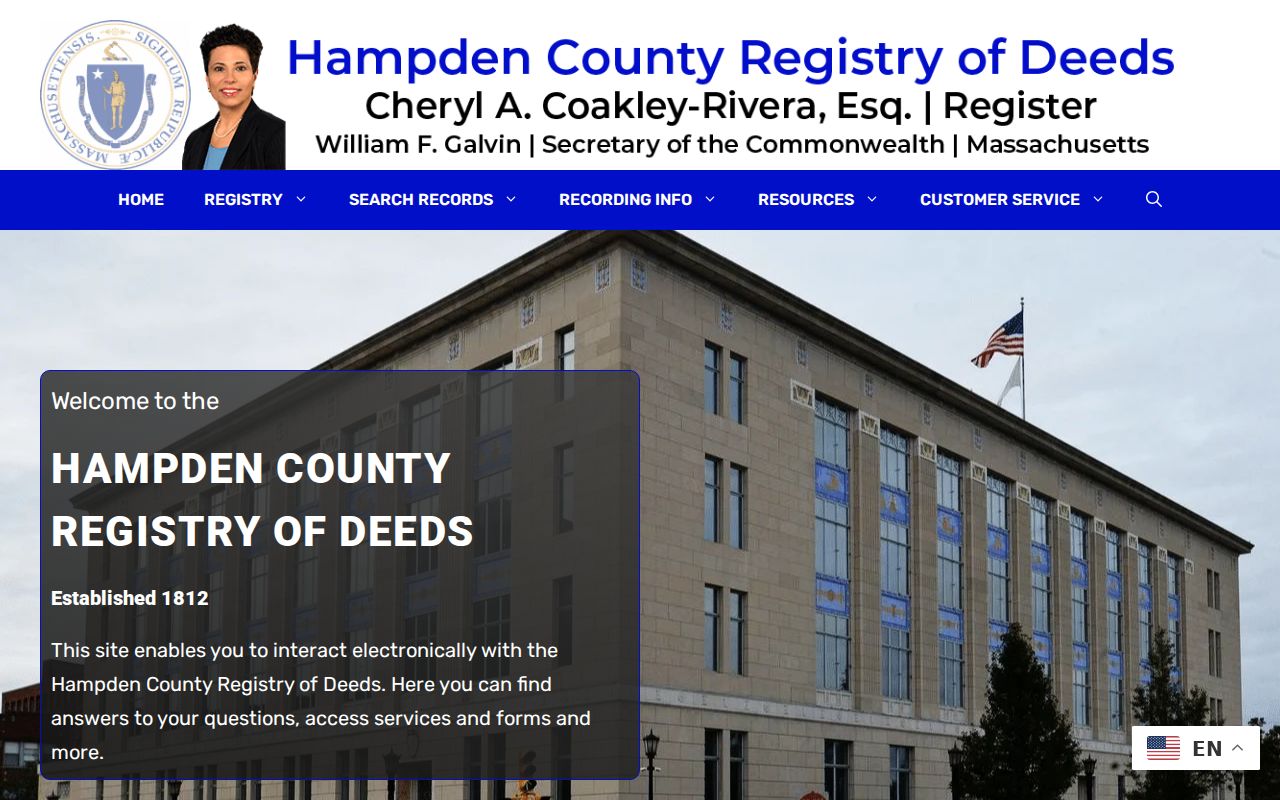
The registry interface shines at one task. It turns a reference on a parcel card into the actual document image. If the first route comes up empty, try both Recorded and Registered Land. Do not give up on it too early. Fees are modest. The Registry describes ordinary online copies as free. Certified copies run $1 per page, and recording fees shift with the instrument type. Remember the cast of a deed. A grantor gives up an interest; a grantee receives one. Those two roles describe a transaction, not a roster of everyone at an address. Releases, assignments, liens, and plans can matter just as much as the deed itself. Probate transfers can too, in a chain of title.
West Springfield Court and Vital Records
MassCourts eServices opens public docket searching once a Court Department is picked. Four tabs drive the search: Name, Case Type, Case Number, and Ticket/Citation Number. Each has quirks. Name searches carry minimum-character rules. Case-type searches span no more than 30 days at a time. A case number must match its capitalization, spaces, and zeroes exactly. A matching result can show a party, case number, type, file date, status, court, and affiliation. The online display is a convenience, not the official court record. Recent activity may be missing.
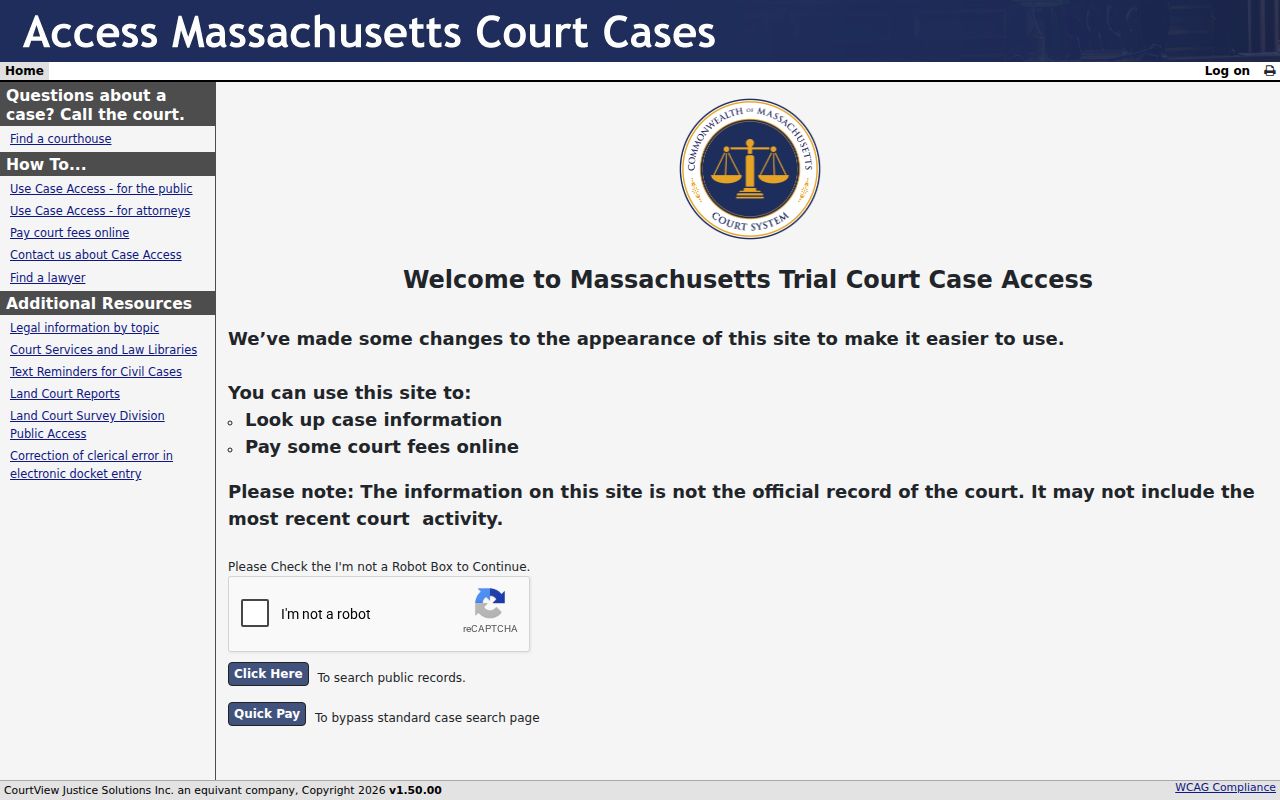
Treat the public interface as a signpost. It points toward the right clerk. Juvenile, impounded, sealed, and other restricted matters sit outside any general public search set. Vital records follow their own map, and the Massachusetts ordering route splits custody by era. The West Springfield Town Clerk holds current local copies. RVRS holds records from 1936 to the present. The State Archives keeps those from 1841 to 1935. Access turns on record type, relationship, adoption status, and other rules. A citation, an image, and a certified copy are three different products. Each comes with its own procedure.
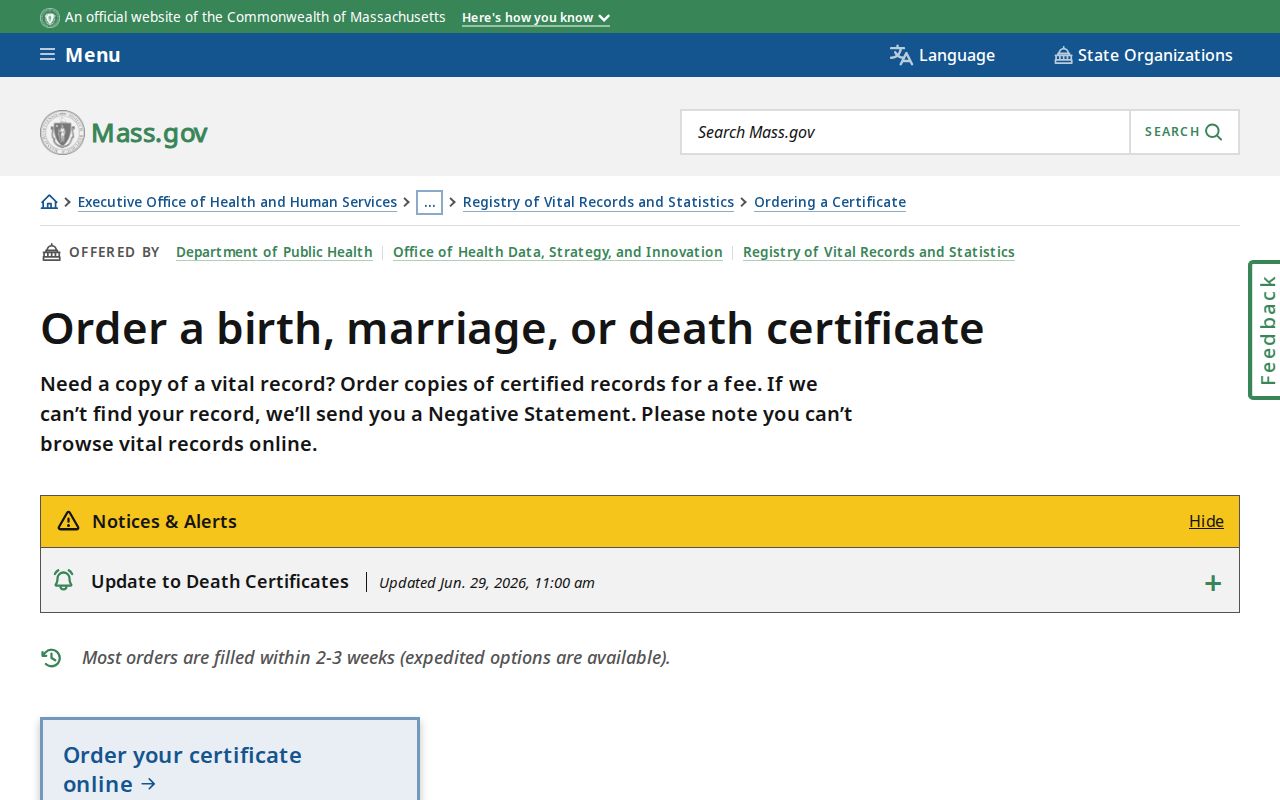
Know the record type, date, and eligibility question first. The state ordering screen answers none of those. It is a route, not proof that an unrestricted certificate is available.
West Springfield Request Routes
The West Springfield public-records request route names Records Access Officers for general, police, fire, school, and retirement records. Massachusetts Public Records Law, G.L. c.66 §10, generally allows ten business days for a response and does not oblige an agency to create a record that does not exist. A strong request states the department, the existing record type, a date range, geographic scope, and a preferred format. A sweeping demand for everyone at an address is not a focused records request.
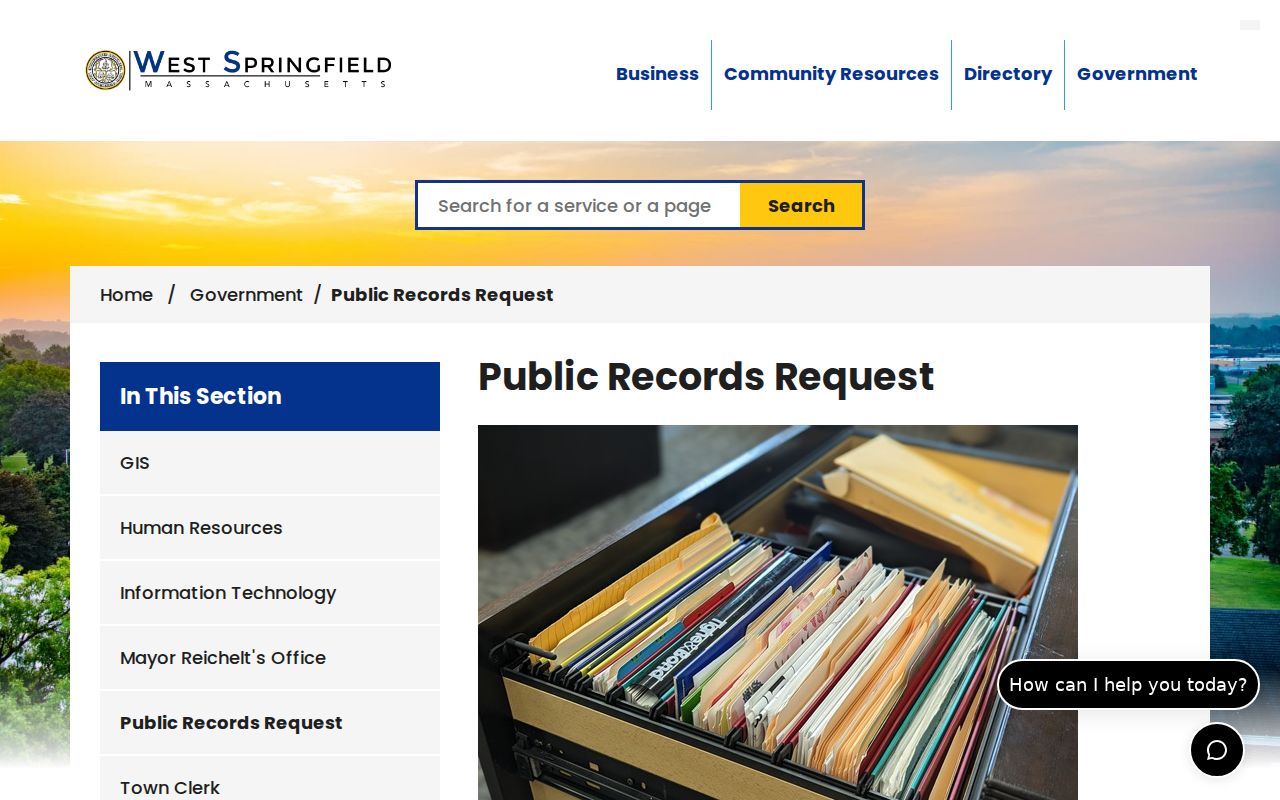
The town route helps match a request with its custodian. A response may take the form of an inspection, a fee estimate, a redacted record, a clarification, or a lawful exemption.
The Town Clerk is also the local route for vital records, business certificates, meeting records, and other clerk services. The office sits at 26 Central Street, Suite 8, and lists 413-263-3012 with weekday hours of 8:00 a.m. to 4:30 p.m. Local certificate copies are listed at $10, available at the counter or by mail, with stated next-business-day readiness for pickup or mailing.
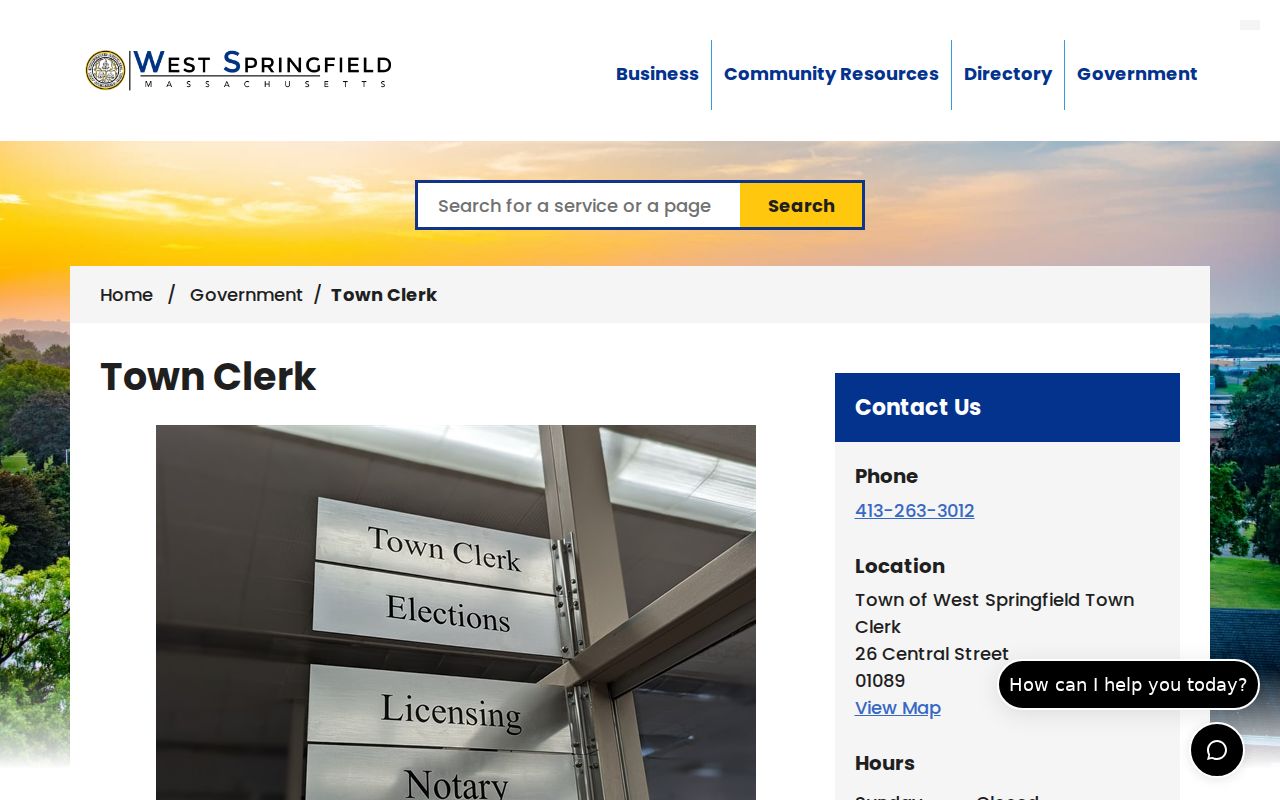
The clerk screen is a custodian route. It is not a public database of every local vital event or business record. Note: Court files follow Judicial Branch procedures, so a municipal request cannot replace a clerk, register, or court-archives copy request.
Historical West Springfield Directories
The Bertera History Room at West Springfield Public Library holds the town's deepest historical shelf. Its West Springfield directories run from 1860 to the present. Town Reports cover 1860 through 1983. Maps, newspaper material, and yearbooks from 1913, 1914, and 1923 onward sit alongside them. Materials stay in the room. Use them during open hours or by appointment. A microfilm reader is available. Printing and scanning are not offered, so plan to hand-copy what matters. When you copy a directory entry, note the details. Record the volume year, page, publisher, street spelling, and any abbreviation key.
A historical directory entry is a clue, not a verdict. It may point to an occupant. It may also mark a boarder, a business, a mailing address, or a stale address from an earlier year. Cross-checking is essential. The West Springfield historical directory collection walks the shelf-by-shelf method. It includes regional Springfield fallbacks and the newspaper gap left by the September 1946 strike.
The 1795 plan and 1831 maps offer a second test. They help verify an old street or locality. Pair them with GIS and title records rather than substituting for either. West Springfield's older labels, river geography, and boundary shifts can explain a confusing result. A hit may seem to land on the wrong side of the modern town line.
West Springfield Record Labels
Labels keep the West Springfield residents directory honest. A parcel field names a tax-record owner. A Registry result names a document party. A directory entry names a historical listing. A voter form returns registration details for the person entered. A permit may name an applicant or contractor. A corporate filing can name an officer or agent, and probate can name an executor, heir, or devisee. Every label describes a relationship to a record. None of them guarantees a present-day residence.
The Massachusetts Corporations Search shows why. It accepts an entity name, an individual name, an identification number, or a filing number. A summary can list formation or registration date, status, officers, filings, and addresses. Treat any filing address with care. It may be a business, a commercial agent, a law office, or an old contact point. Never promote it to a home address without independent, dated evidence.
The state form keeps the entity and individual pathways separate. It serves business identity research well. For a DBA or business certificate, the Town Clerk is the local path in West Springfield.
West Springfield Claim Trail
When an estate or former-business trail goes quiet, the Massachusetts unclaimed-property search offers a separate state-held lead. Searching is free. The official process takes a name and address, then asks the claimant to pick a matching property and submit proof. Filing a claim costs nothing. The state notes that many claims require documentation. A result signals a potential claim, never a current-residence confirmation or proof of entitlement.
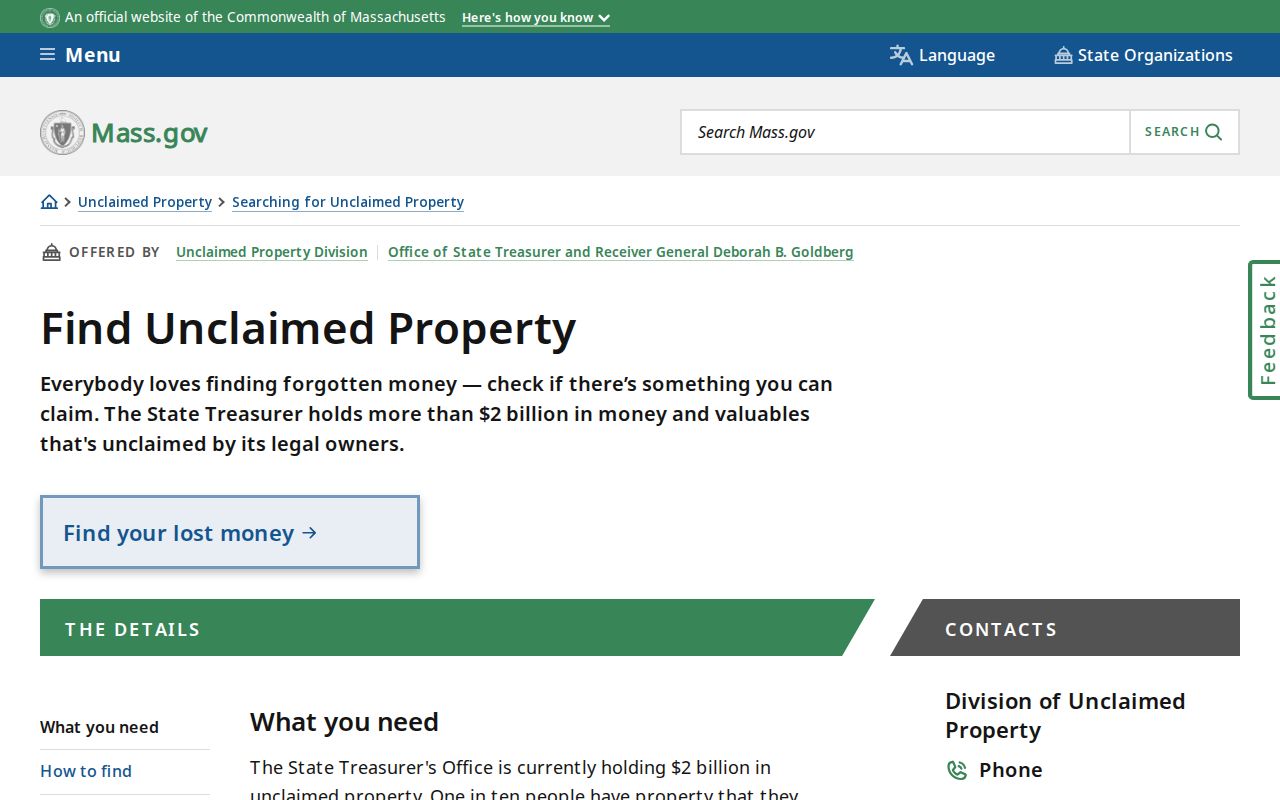
Bring the official search into a records trail only after identity and claimant rights are verified. Do this through the state process. And treat any unsolicited advance-fee demand to release property as a red flag.
West Springfield's current records work best when each stays tied to its institution. The assessor gives a parcel snapshot. GIS covers geography. The Registry covers title. The clerk holds municipal files. The courts keep their public dockets. The library preserves the historical paper trail. Keeping that division of labor keeps a residents directory search precise. It also stops scattered public fragments from becoming a private-person dossier.